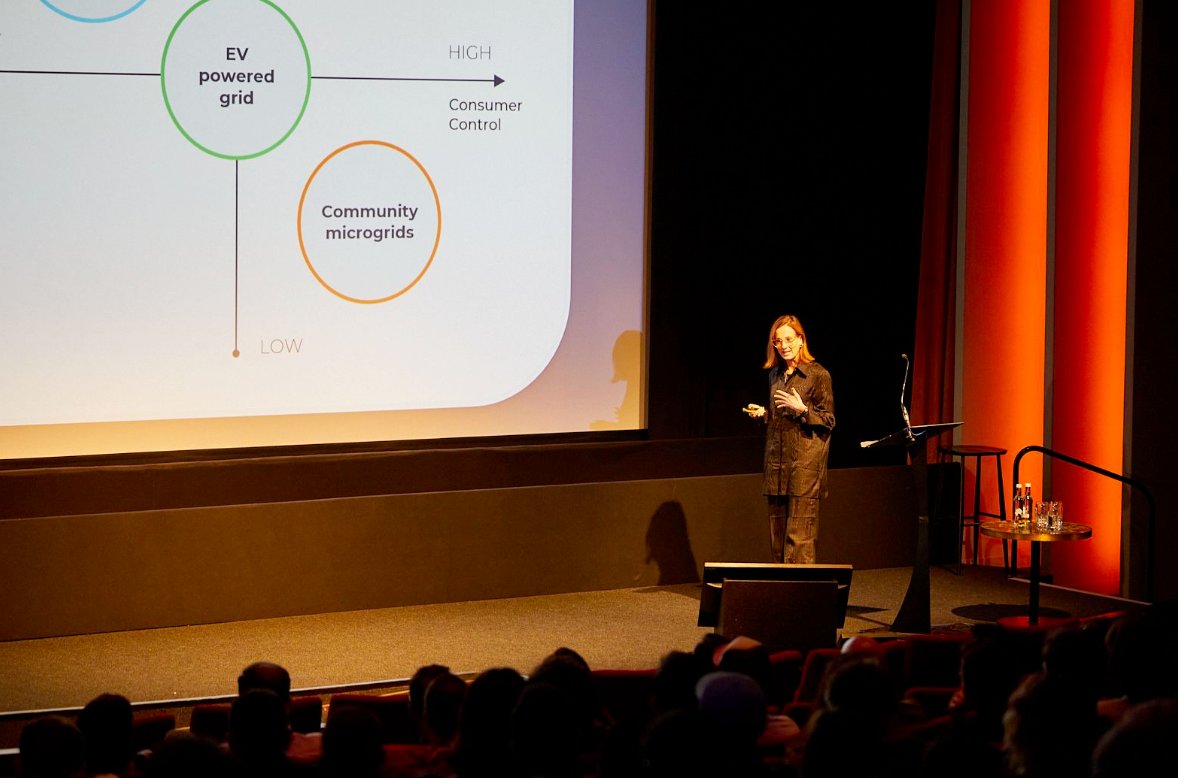
Keynote · BFI Southbank
Expanding the core: how enterprise products grow without fragmenting.
Private preview
Product & Experience Leader
Everything behind this page is confidential work, shared privately and meant only for the person this link was sent to. Please keep it in confidence, and do not forward, share or reproduce it. Enter the password you were given to continue.

Product & Experience Leader · Enterprise platforms
I build the connective layer of complex enterprise products: the architecture, journeys, research and strategy that hold them together, so the experience stays simple and human for the people who use it.
Twenty years across energy, financial services, e-commerce and intelligence platforms, designing for both expert users and the consumers they serve, in regulated, high-stakes domains. I work as a peer to product, engineering and commercial leadership, shaping operating models, org design and strategy as much as the roadmap.
I now work AI-native: building functional prototypes in code with AI tools, designing agentic products, and shifting my team's craft from screens toward systems thinking, research and orchestration.
Point of view
The hardest decisions in enterprise products aren't visual or interaction decisions. They sit in the architecture: where a new capability belongs, what it means for the journey, what it implies for the commercial model, how it survives the regulation around it. That layer is usually owned by no one, which is exactly why products fragment.
The work I've moved toward, and the work most underweighted in product organisations today, is leading that layer explicitly: holding all of it as one piece of thinking, then building the product and the plan together, so what ships is what was actually decided. Having a clear view on what gets built next, and why.
The connective layer
The craft, the architecture beneath it, and the foundations that hold it together at scale.
The craft
The foundations
Selected roles
 2022-present
Product & UX Director · Energy
Joined to lead the UX function as one craft: research, service design, journey management, product and content design. Rebuilt it from siloed specialists into embedded generalists backed by senior specialists, 27 people, and own its operating model, budget and headcount. Accountable for UX quality across Kaluza globally.
Grew the remit to lead the Global Enterprise Experiences Platform, the enablement layer beneath every Kaluza product, and to own its budget and headcount. Two teams sit under it: one owns the Nebula design system, global information architecture and accessibility standards; the other builds the shared application shell and its front-end engineering. I set their roadmap and the quality gates that hold the suite to a measurable bar, and help shape how the company is structured to deliver, from spheres and squads to value streams, with an organisational redesign now underway for scalability and investability.
Now also lead the product vision for agentic customer care for energy retailers (described below). I took that strategy to board, investor and joint executive forums and secured investment in a new programme and strengthened a major competitive bid.
The platform, product and research outcomes from this remit are set out in Latest work below.
 2021-2022
Senior UX Manager, Maternity cover · E-commerce
Joined on maternity cover and used it to grow the function: sharpened how it operated, with a focus on upskilling, and established the data visualisation practice. Reported to the Global VP of UX, whose organisation ran to around 500 people.
 2015-2021
Lead Designer to VP, User Experience · Insights & intelligence platforms
Joined as lead designer on Vizia, an enterprise marketing reporting and command-centre platform, and led a full redesign, its information architecture as much as its interface, with new data visualisation at its heart.
As Head of UX Research, I built the company's first research function. I set the UX research roadmap, grounded the craft in contextual inquiry and mixed methods, and embedded a researcher in every product team. The remit later widened to include content design.
Promoted to VP of User Experience to lead a multi-discipline practice, connecting the dots across business silos to strengthen the end-to-end customer experience. Introduced UX outcomes as a shared measure of progress toward a better experience for product teams and squads.
Further outcomes available on request.

 2011-2014
Independent Consultant · Financial services
Led UX on two tier-one banking platforms: Deutsche Bank's AutobahnFX, the FX trading platform within the Autobahn suite, and RBS's MicroRates, a digital hedging and risk-management platform for specialist lenders. Both were architectural-level redesigns, not interface polish. On AutobahnFX, I ran the platform-wide user research and used it to move programme leadership from the cosmetic refresh they had scoped to a full rebuild.
Latest work
Product & design strategy, prototypes · Energy platform
I own the end-to-end customer experience for an agentic AI programme built to prove that AI can resolve the majority of an energy retailer's customer contact, not just deflect or route it. The customer-facing agent handles both routine and complex contact through a conversational, multimodal experience, escalates to a human only when it should, and is held to a bar of genuine resolution at or above the human baseline. Success is measured on efficiency and experience together. Built for enterprise scale.
I set the product and design strategy and built the working prototypes myself in Claude Design and Claude Code, taking the experience all the way to code. It runs on a trust model of continuity, honesty and safety, with transparency and human control designed in. I kept safety-critical routing, including for vulnerable customers, out of the probabilistic layer.
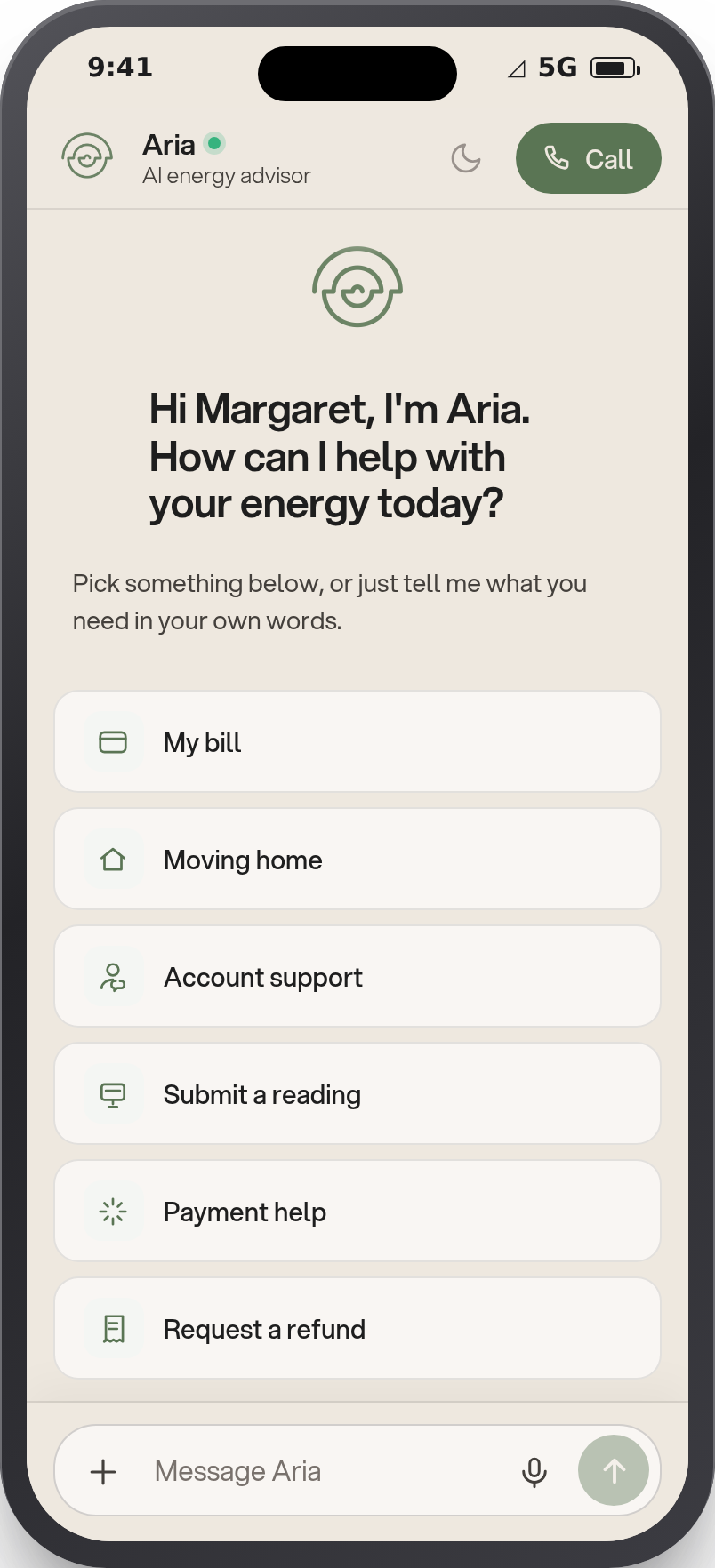
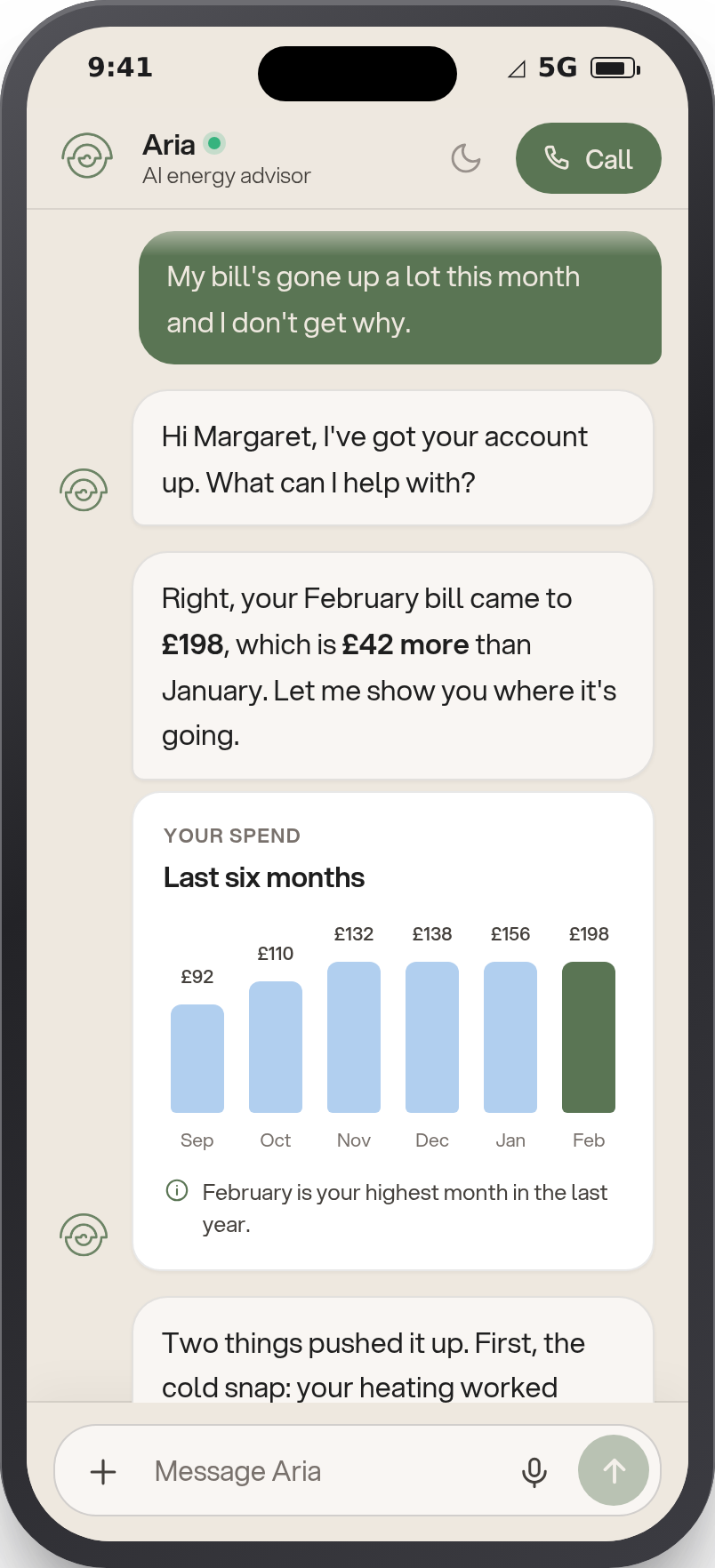
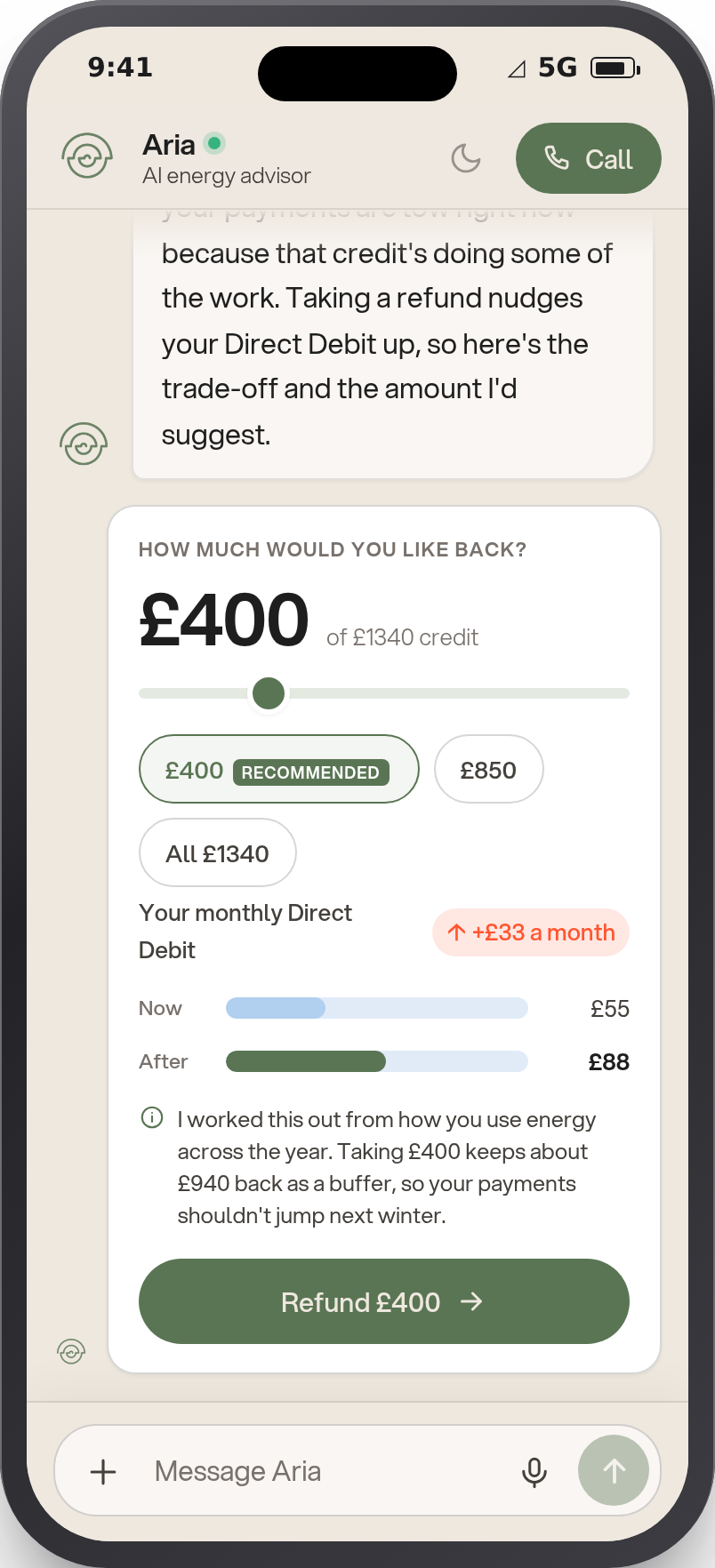
These are screens from the working prototype. A full recorded walkthrough is held back here for confidentiality, and I am happy to show it on request during an interview.
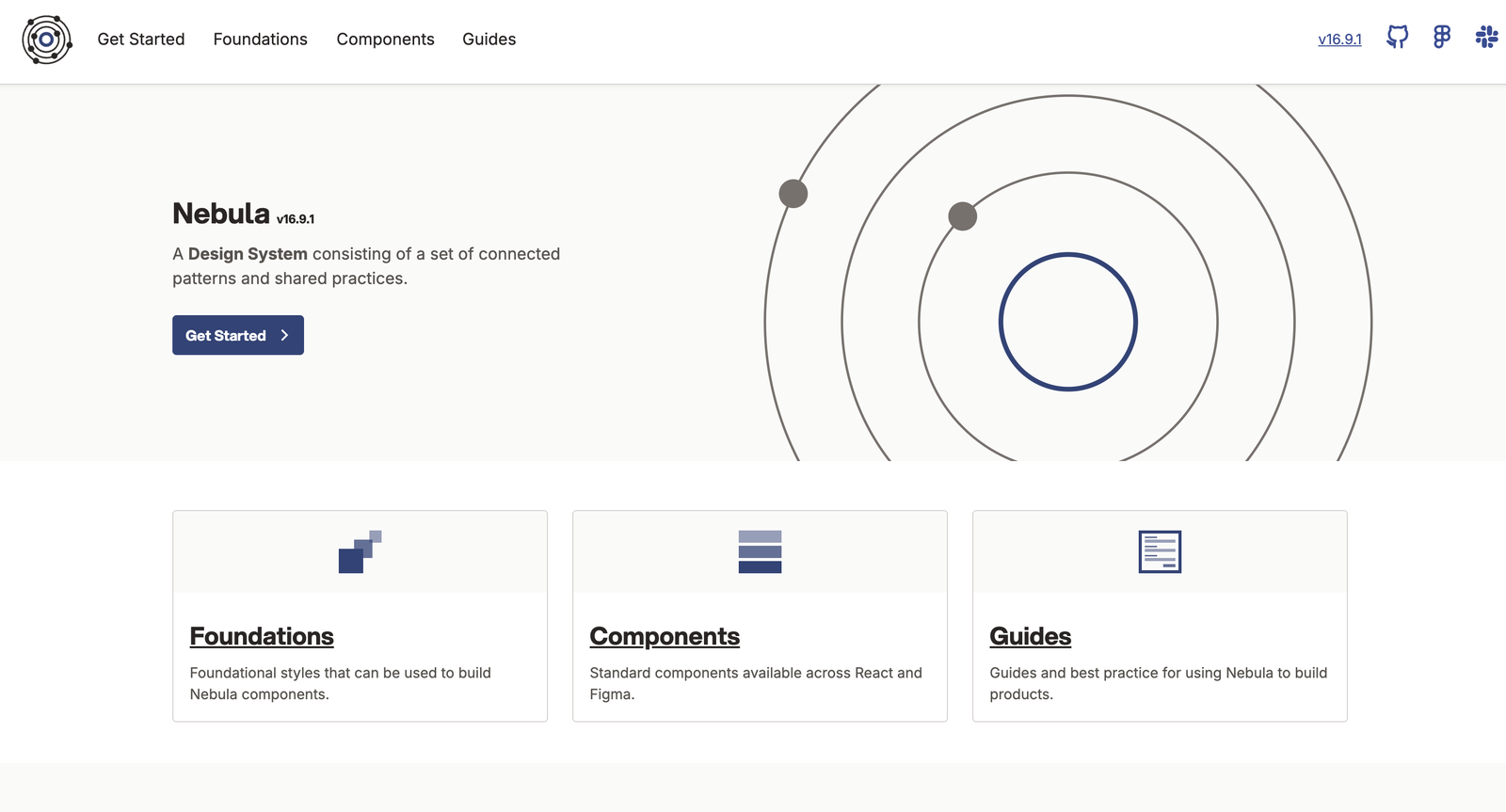
I own Nebula, Kaluza's design system. I inherited it as a customer-facing library built for a single product and have been evolving it into an enterprise source of truth, in code and in design, now serving several product lines.
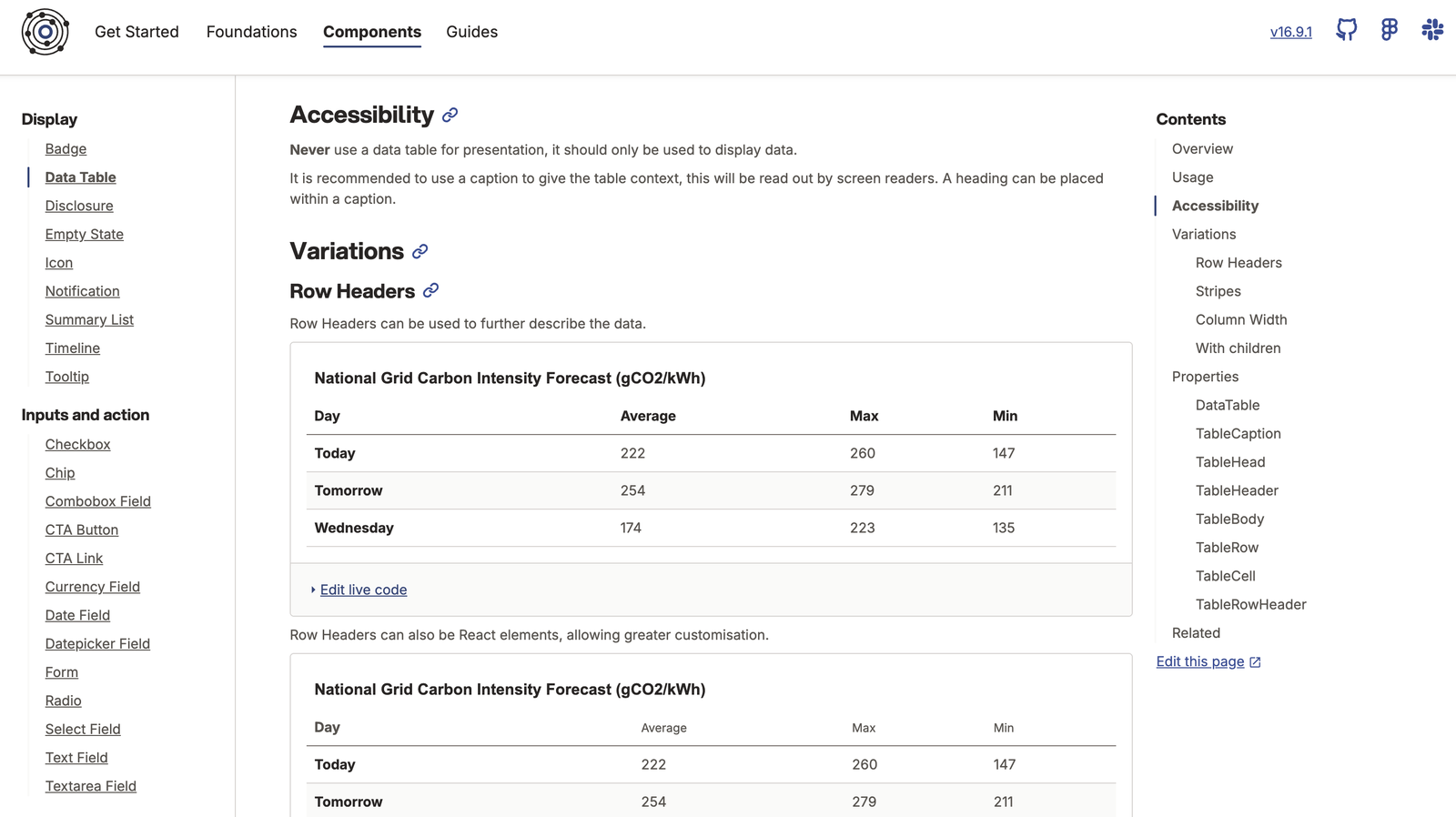
I own its governance, the parity between its React components and its Figma libraries, its accessibility standards, and the contribution model that lets teams extend it without fragmenting it. Design and build stay one to one, so what is specified is what ships.
Each new surface tightens the shared standard, with no forks.
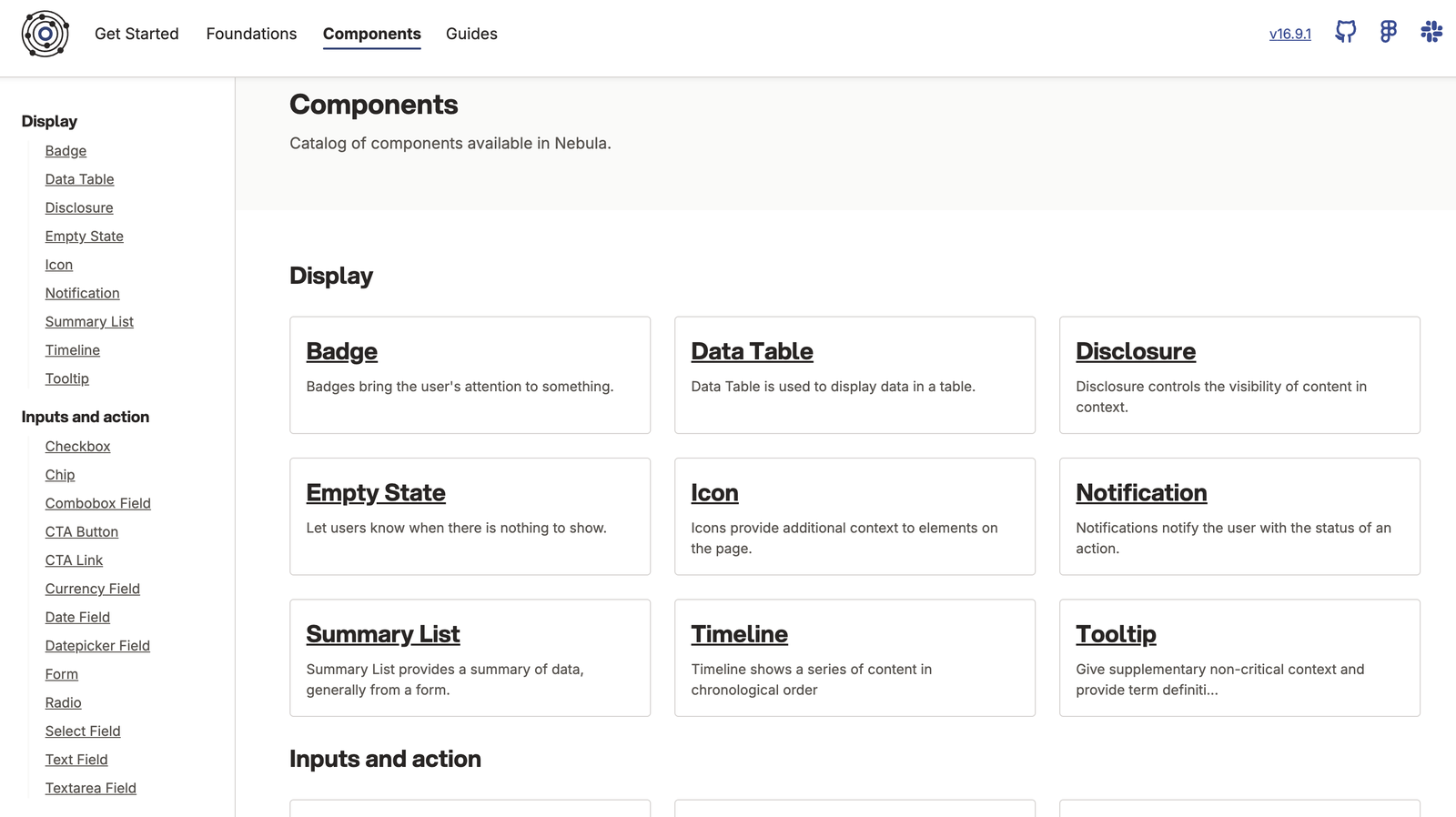
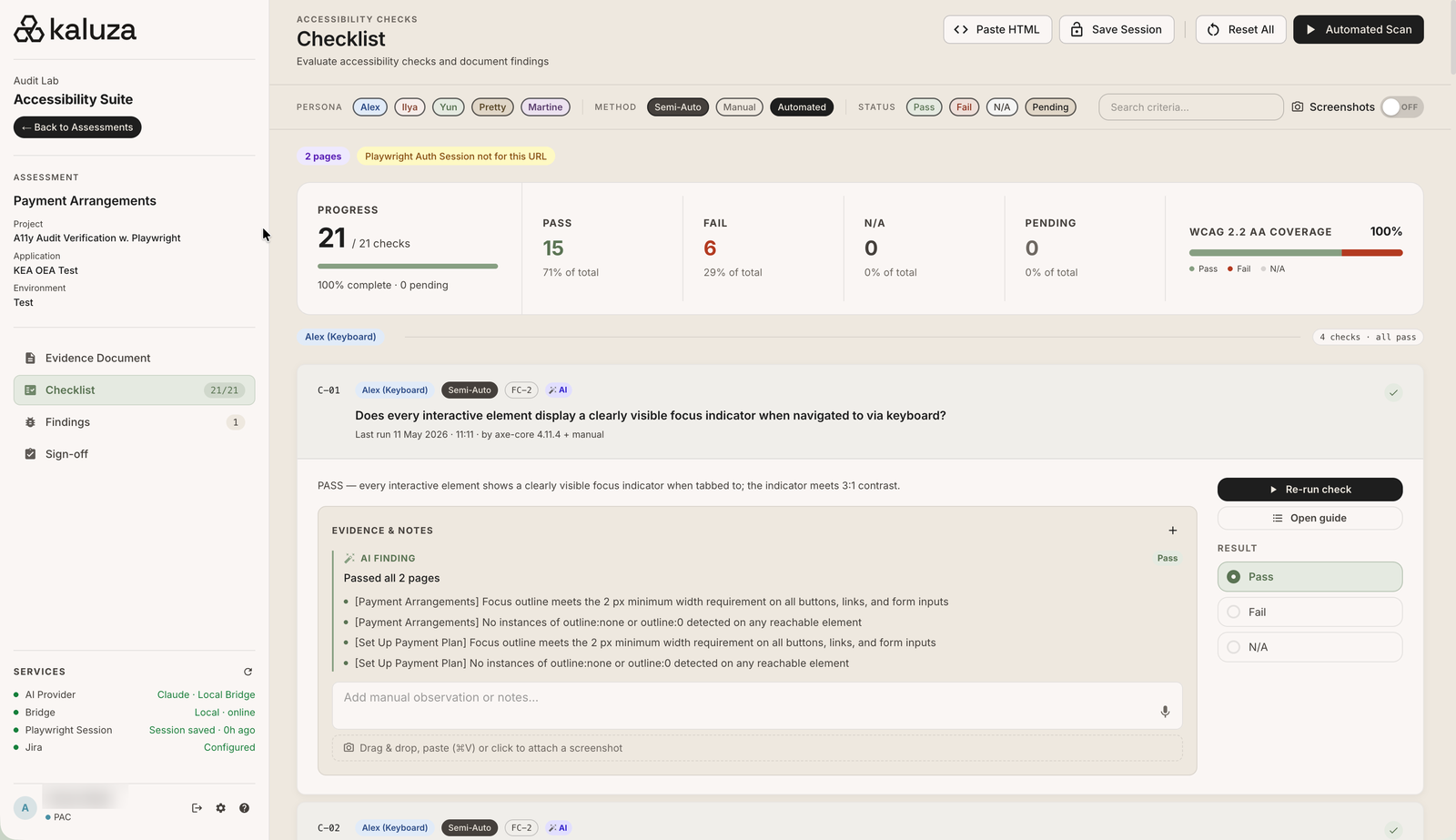
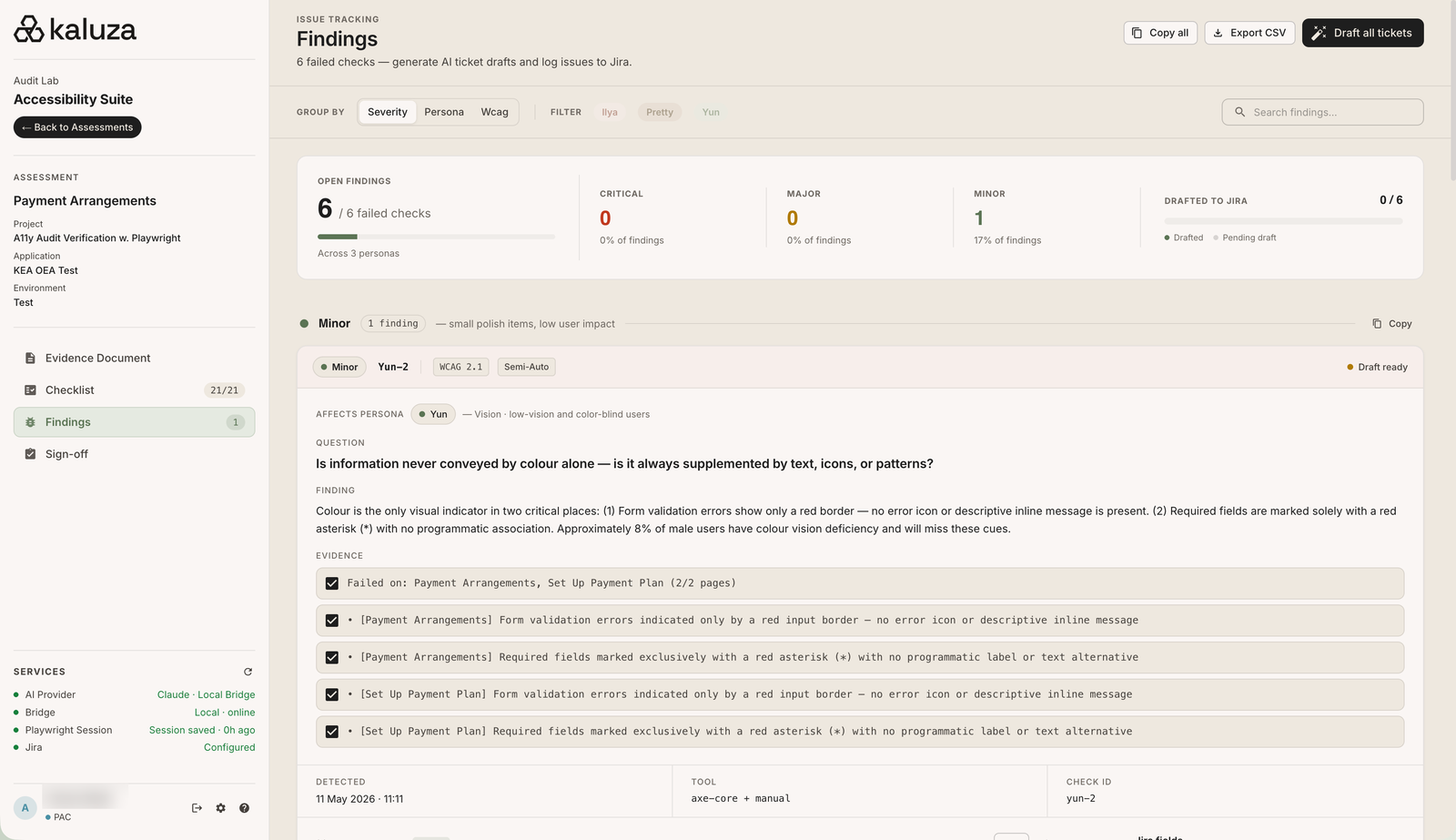
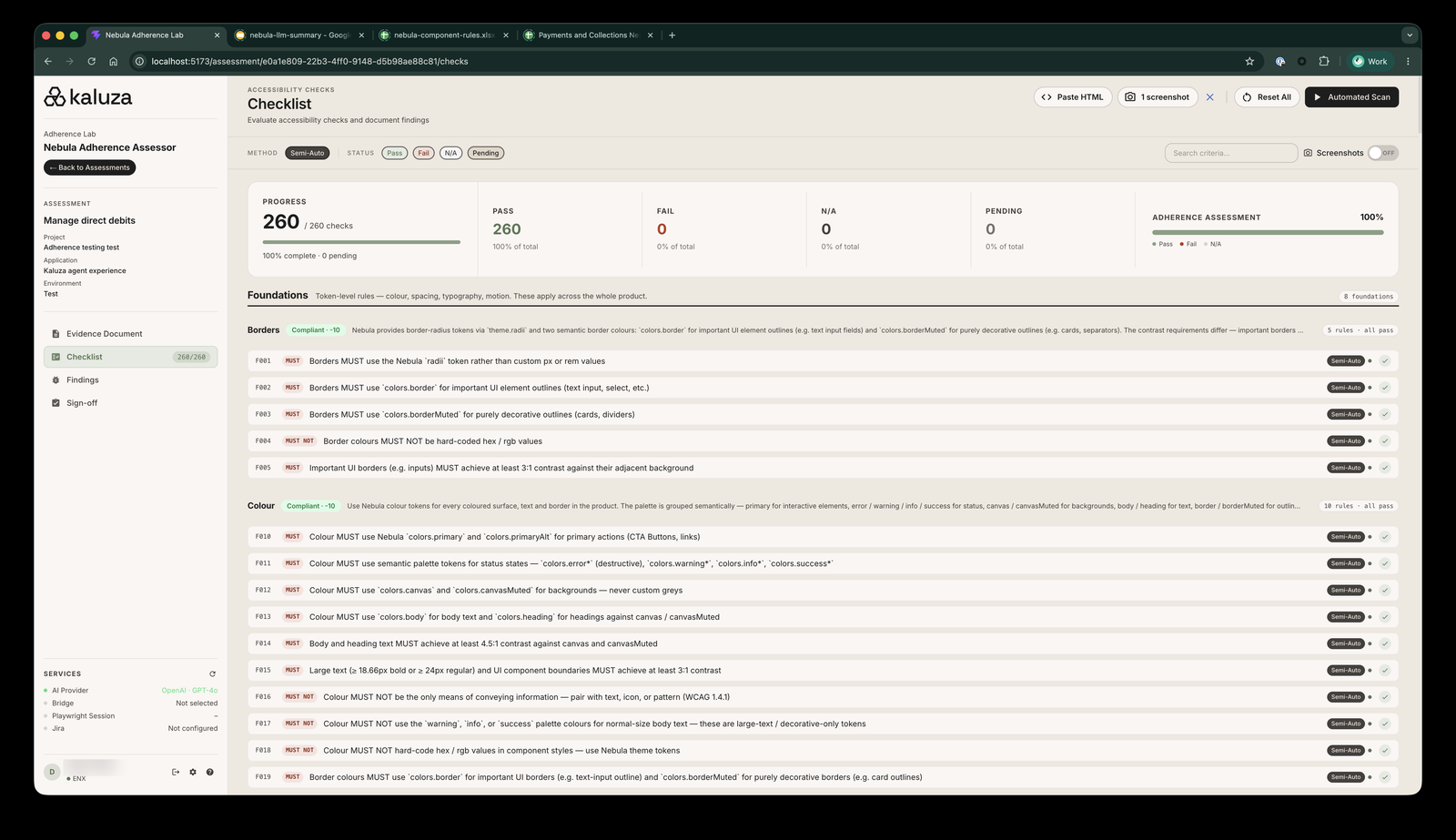
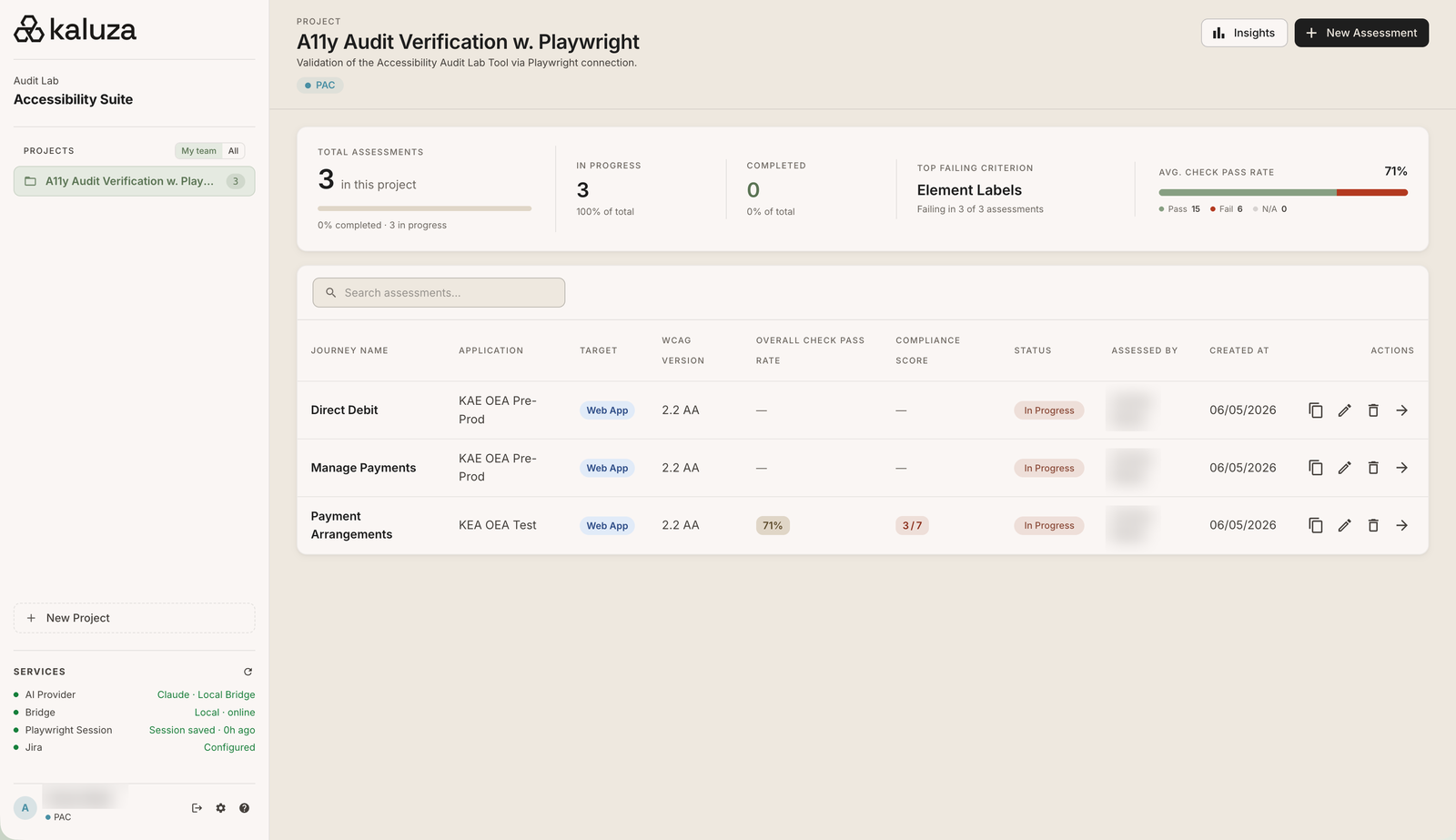
Standards only hold if something enforces them, so my team has been building the tooling that does, with AI. The first runs structured WCAG 2.2 accessibility checks against live applications, Figma files and component libraries, pairing automated scanning with AI-assisted analysis, and turns failures into drafted remediation tickets and exportable conformance statements.
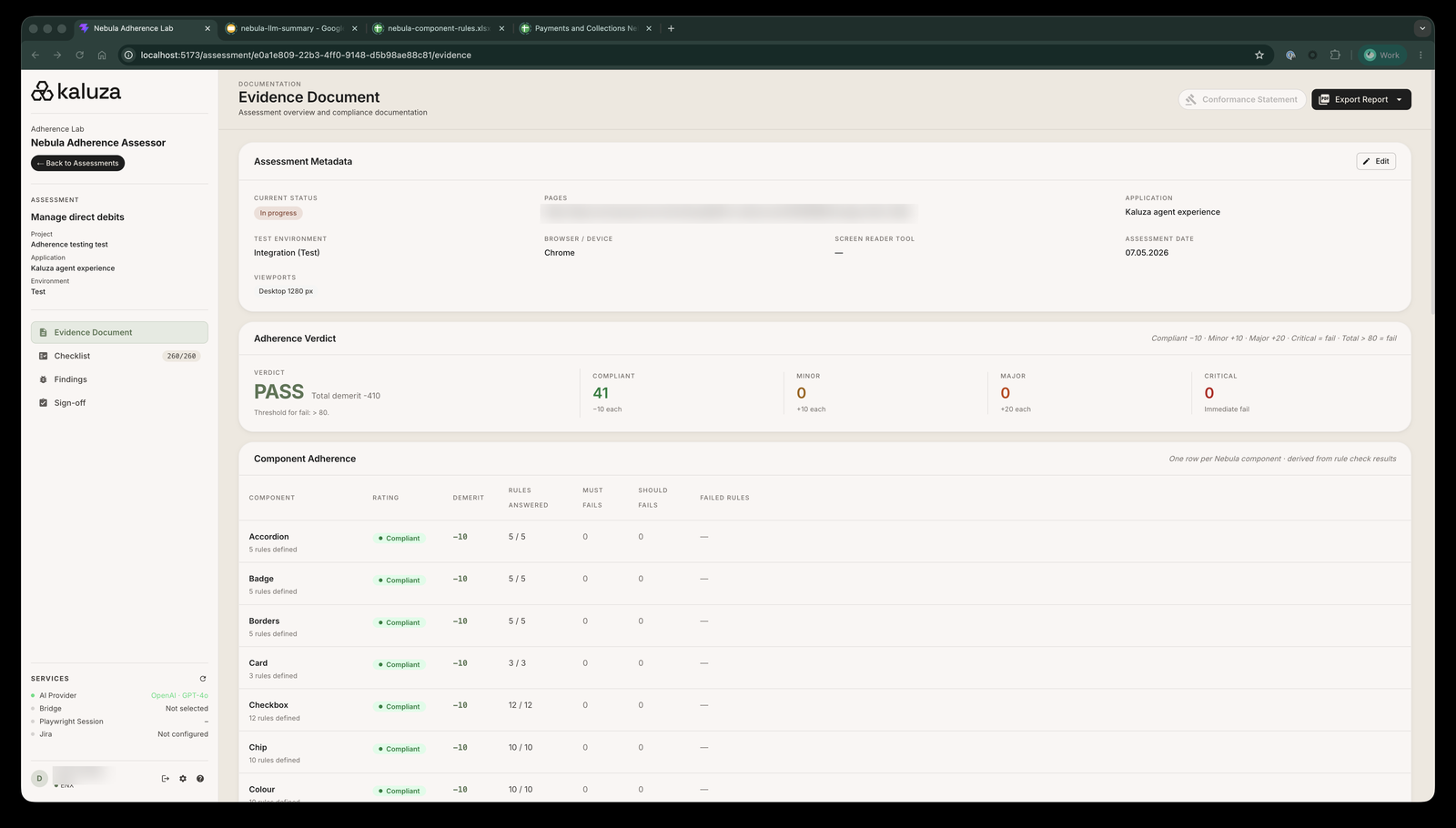
The second does the same for the design system: an accelerated front-end QA check that tests a build against Nebula and flags drift. Both started local. The accessibility tool is piloting within my team; the design-system check is moving into the shared testing environment, so every team can run it as they build.
I drafted the front-end architecture strategy for a multi-product estate, and I own the global information architecture that decides where every new capability belongs and how navigation scales. Together they are the structure that keeps a growing product coherent.
I pair them with a UX fitness testing framework that holds the architecture accountable to the experience it produces, as engineering, product and design build against it day to day. It is the infrastructure that prevents the failure mode most enterprise products hit: features that make local sense but fragment in aggregate.
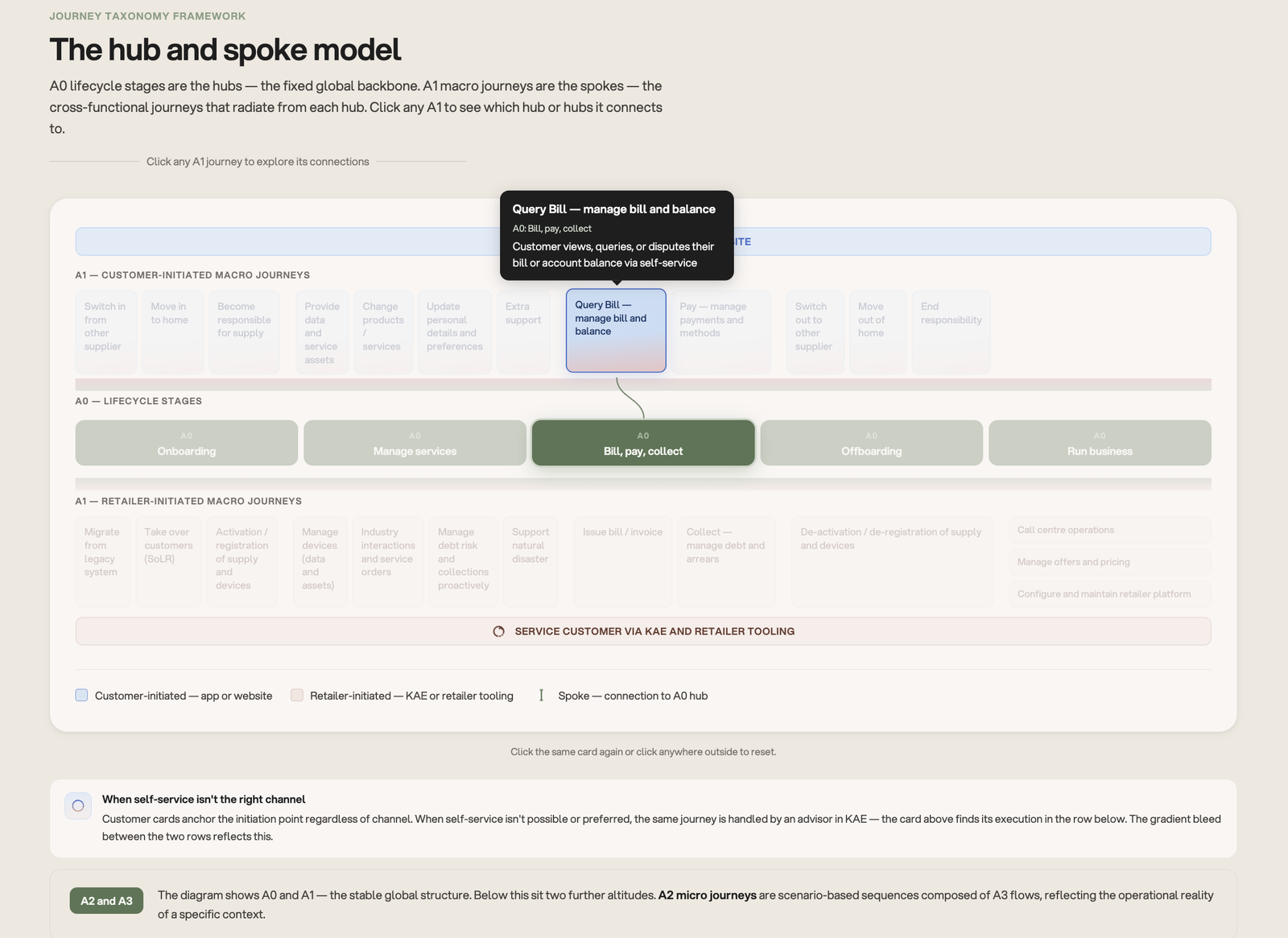
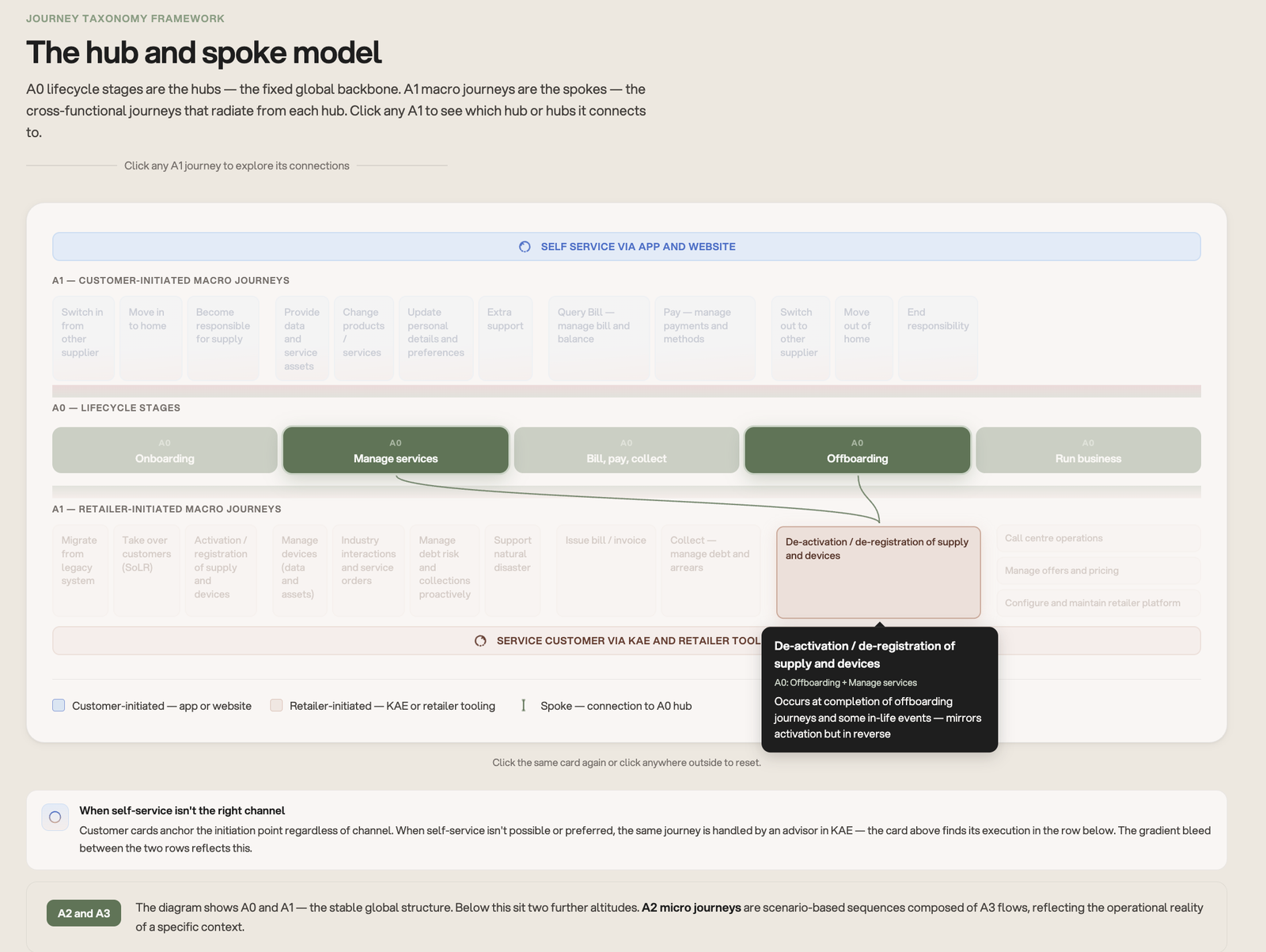
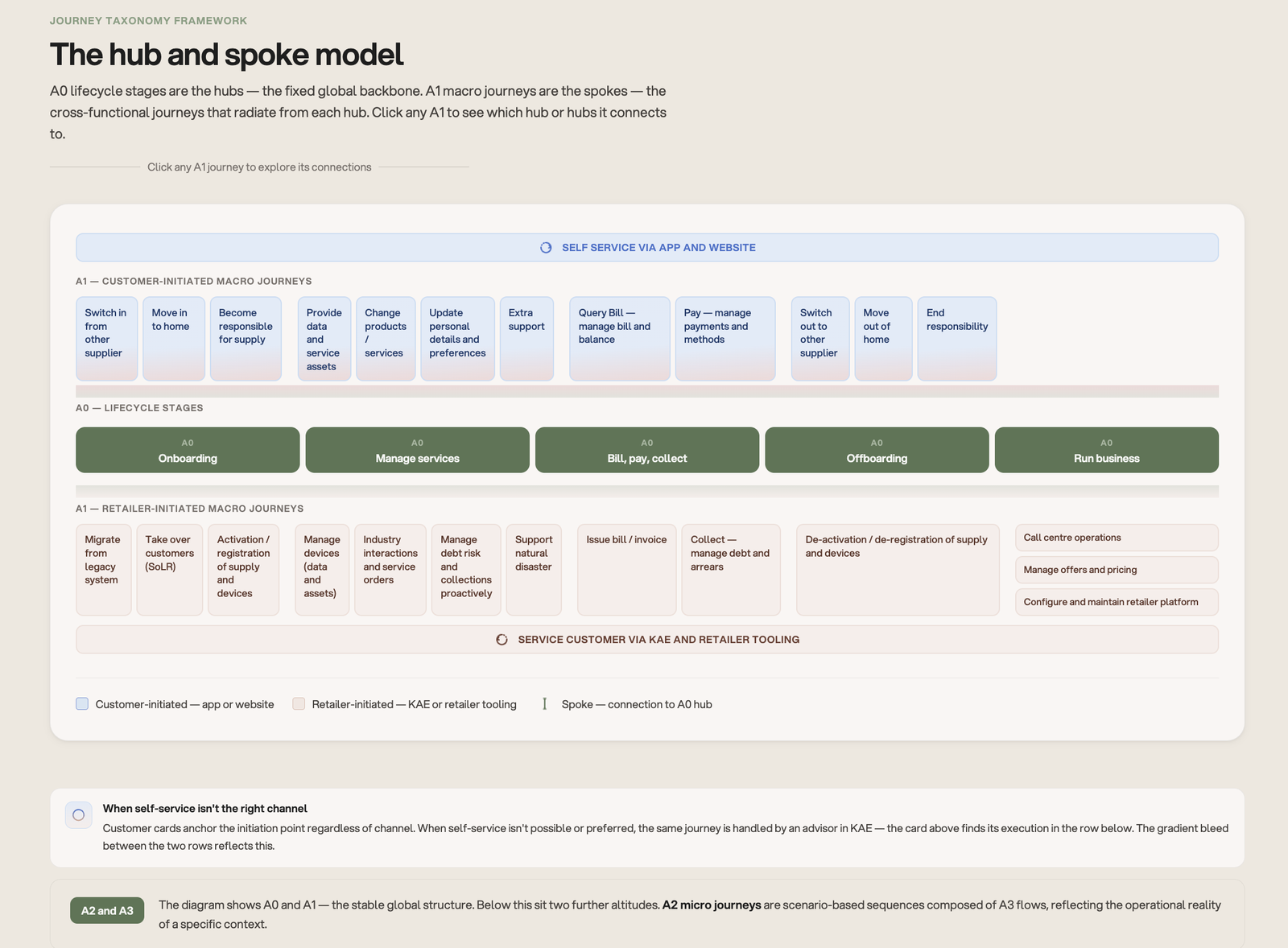
I lead the platform's journey-intelligence and research capability. It owns the global journey taxonomy, a multi-level model of how every user flow ladders up to agreed lifecycle stages, kept as a live single source of truth. The behavioural-analytics metric framework runs across every delivered flow, and its analytics stack is mine.
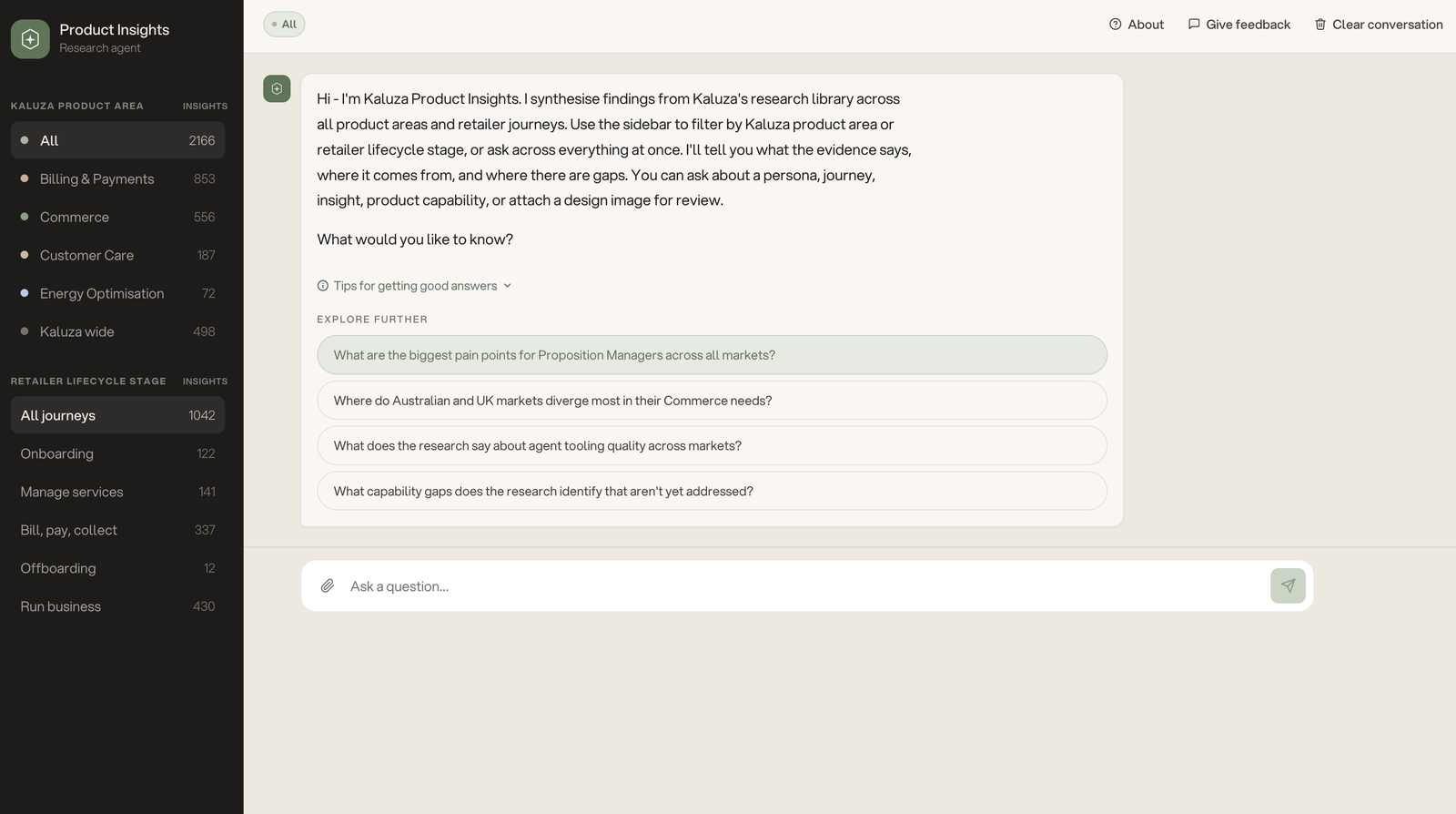
To move faster, the team builds this tooling with AI under my direction. A product-insights agent codes insights against the product map and the journey taxonomy, so product decisions run on a searchable body of evidence. An event-audit tool takes the master design file for a flow, extracts the actions it should emit, audits the events in the codebase and returns exactly what is missing, turning instrumentation from a manual chore into an automated fitness test.
How I lead
HBDI shows a strong synthesiser with an analytical spine. I think in systems and futures, backed by structured reasoning. CliftonStrengths adds the leadership texture: Strategic, Analytical, Self-Assurance, Individualisation, Relator.
In practice, that means I move fast on patterns and slow on people: reading individuals precisely, building teams around what each person uniquely does well. The operating models I design tend to reflect this: small high-performing groups, embedded generalists supported by deep specialists, decisions made with conviction and reviewed against evidence.
Talks
I present product and UX widely, from town halls and internal events I host to external conferences and panels, representing the organisation across these topics.
Keynote · BFI Southbank
Expanding the core: how enterprise products grow without fragmenting.
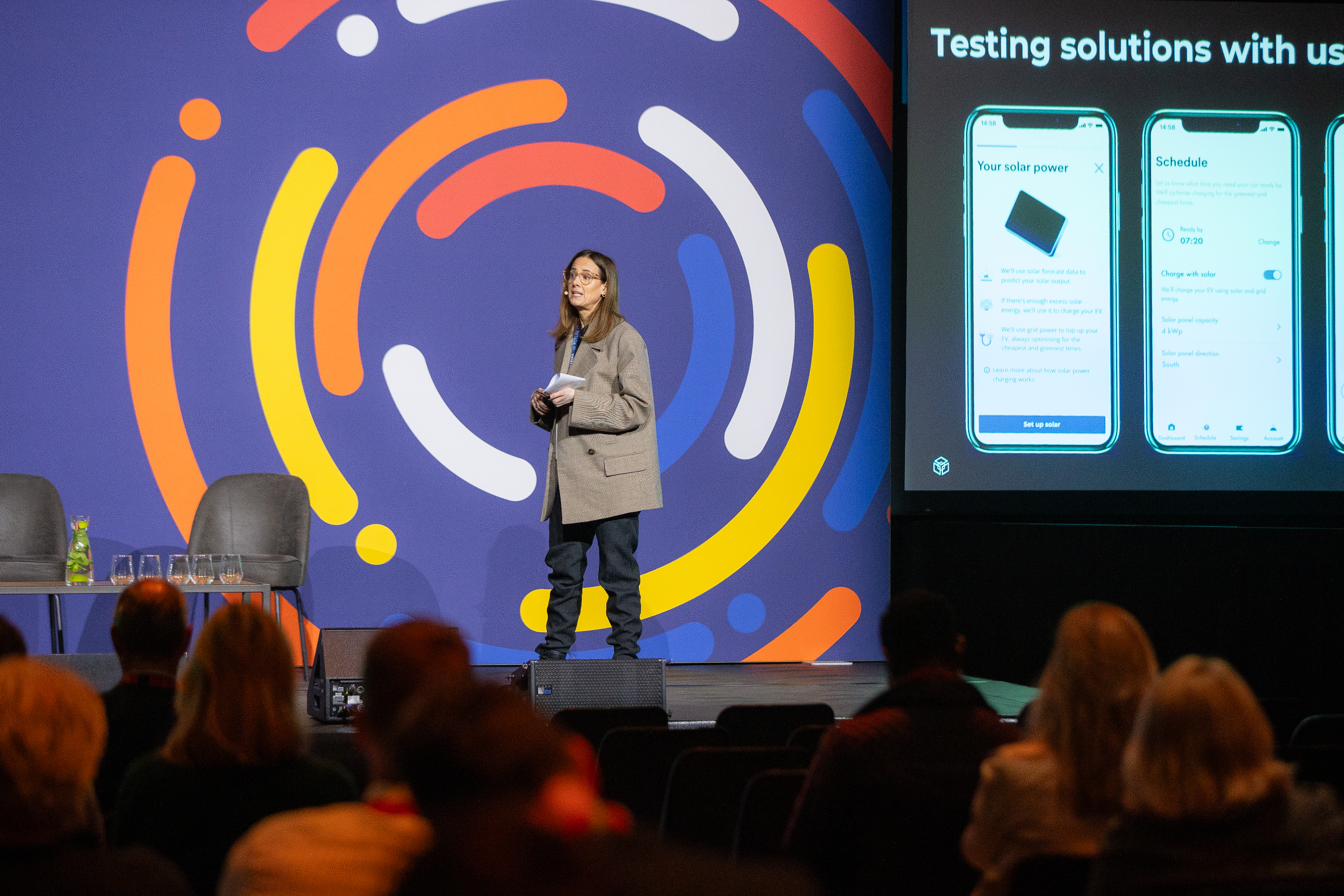
Keynote · Future of Utilities, Amsterdam
Testing solutions with users in the energy transition.
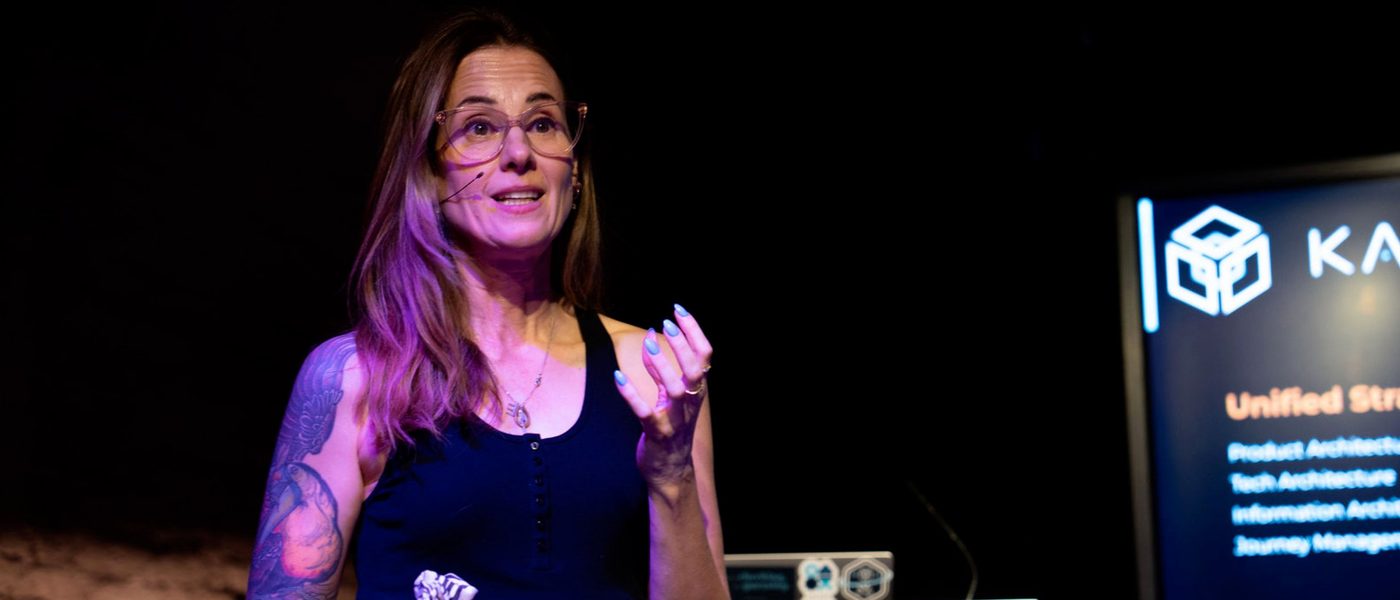
Talk · Kaluza annual conference
Scaling up with information architecture and an enterprise design system.
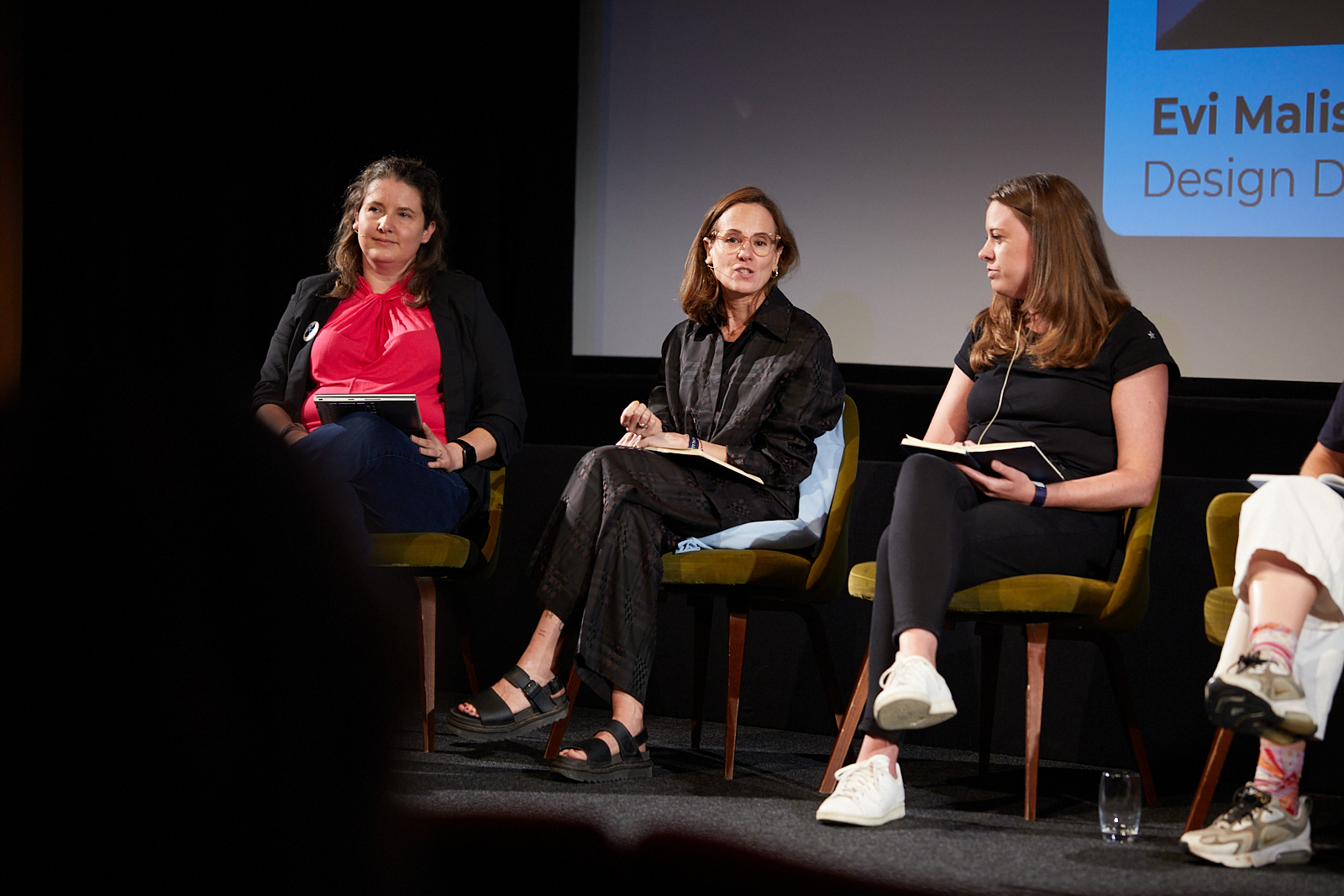
Panel · Conference
Female leadership in regulated industries.
Beyond the day job
Formal mentorship inside the organisations I've led, and structured work with women from underrepresented backgrounds through a dedicated programme. I also coach independently on the side, with a view to formalising this further over time.
Product, content & interaction design · Pre-launch
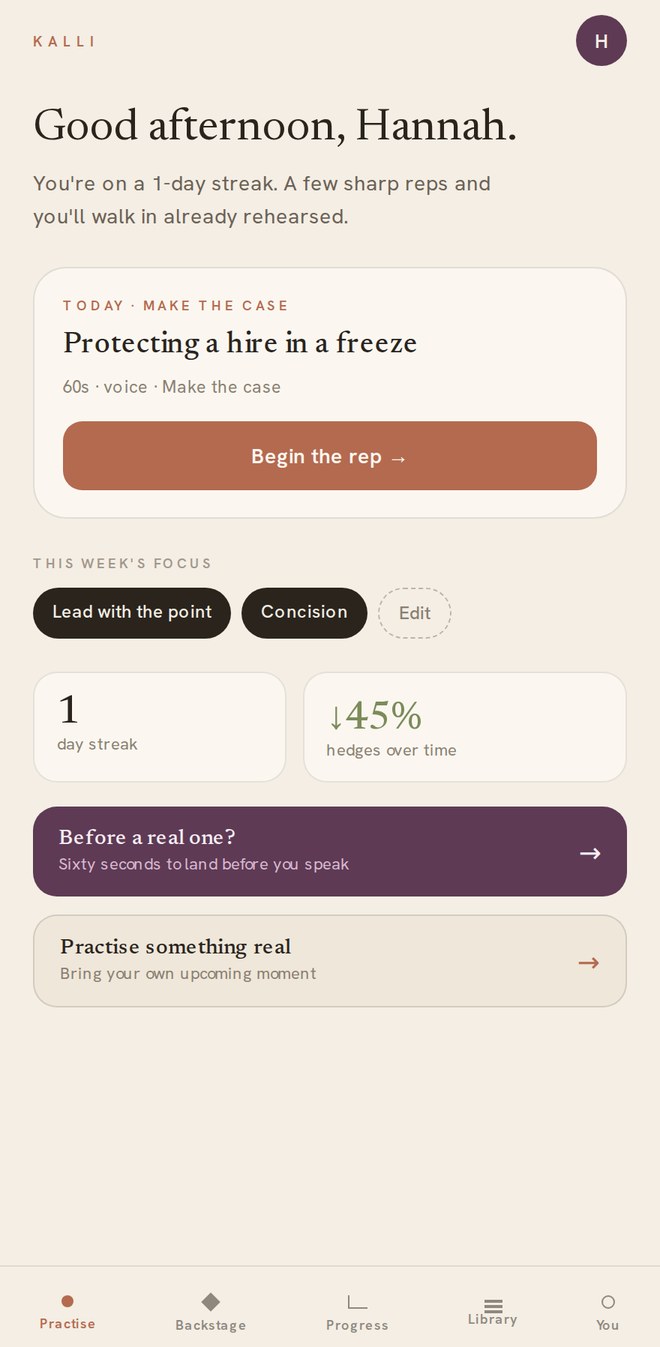
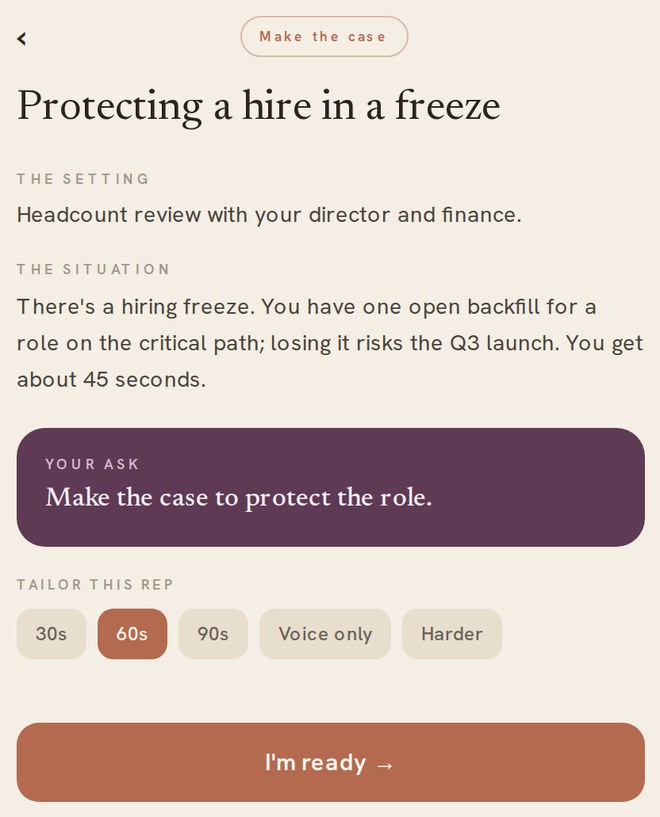
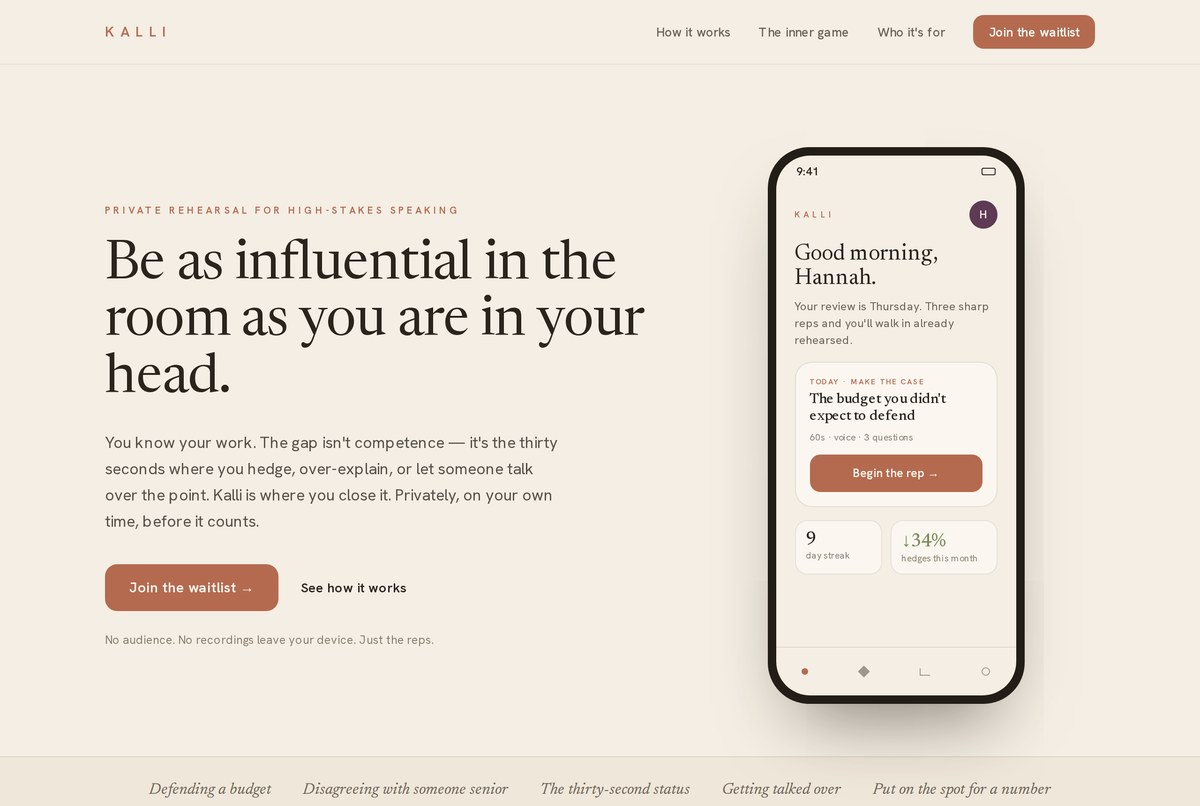
A space to rehearse the moments that carry the most weight: defending a budget, pushing back on someone senior, the update that has to land. Built first for people doing that work in a second language. I designed for both halves of the gap, the thinking and the delivery: leading with the point and holding the floor, then pace and clarity for a non-native speaker, without ever treating an accent as the problem. At its core is a rep loop that runs a real situation in under three minutes: a brief, sixty seconds out loud, an honest read-back on where you hedged, then a sharper take in your own voice. Around it sits the inner-game layer most tools skip: naming the move you make under pressure, reframing the thought that gets in the way, a wins log for the low mornings.
Join the waiting list, or try kallı if you have the password.
Product, content & interaction design · Pilot
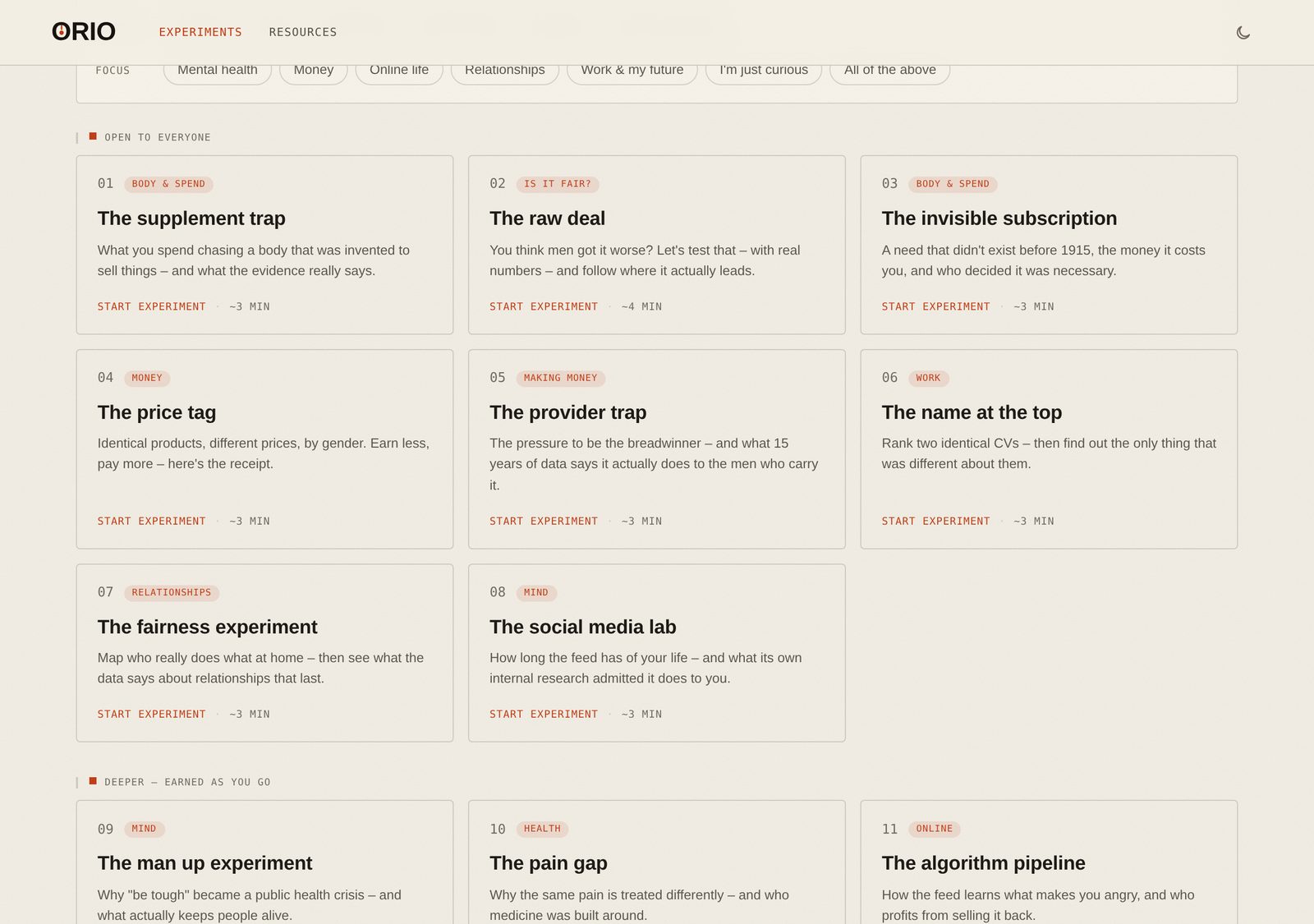
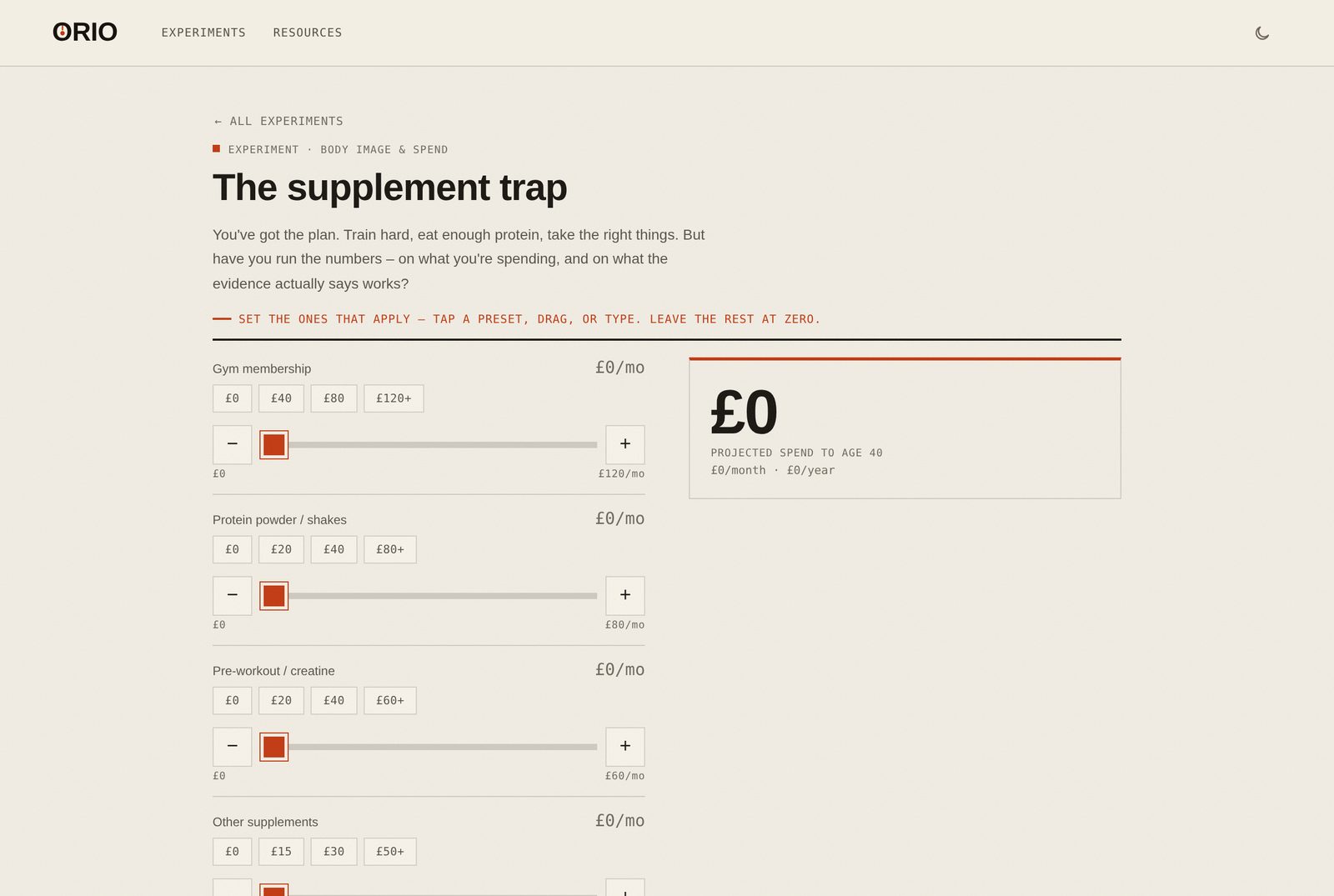
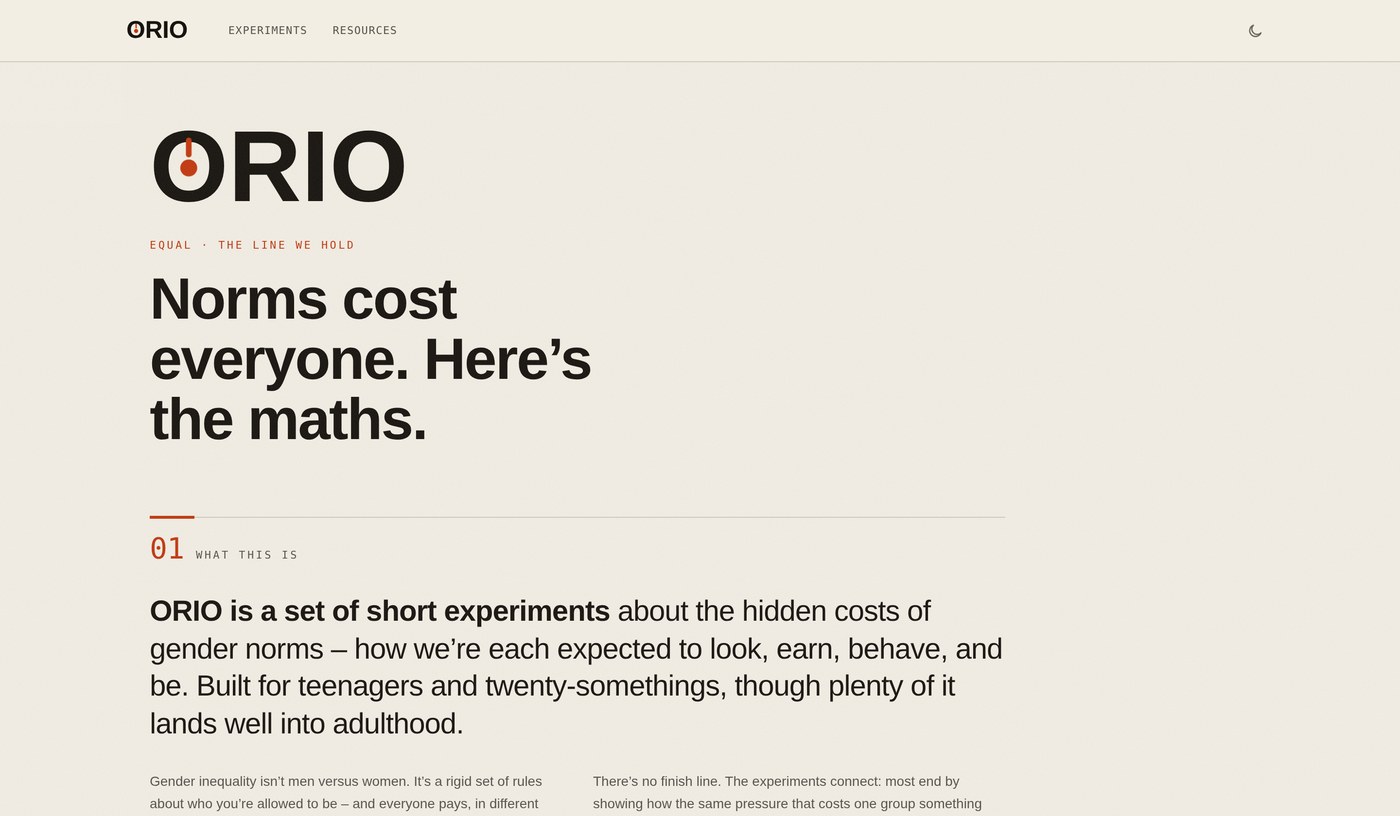
A self-funded pilot: short, interactive data experiments for teenagers and twenty-somethings on the hidden costs of gender norms, making the case with sourced evidence. I designed the whole experience, from the age and content-sensitivity gating to a non-partisan framing that meets sceptical readers on their own terms before the data complicates the picture, all on a privacy-first build where nothing leaves the device. I'm now exploring where it could go: a standalone platform, and partnerships with schools and youth organisations.
Try ORIO if you have the password.
Interactive installations · Exhibited
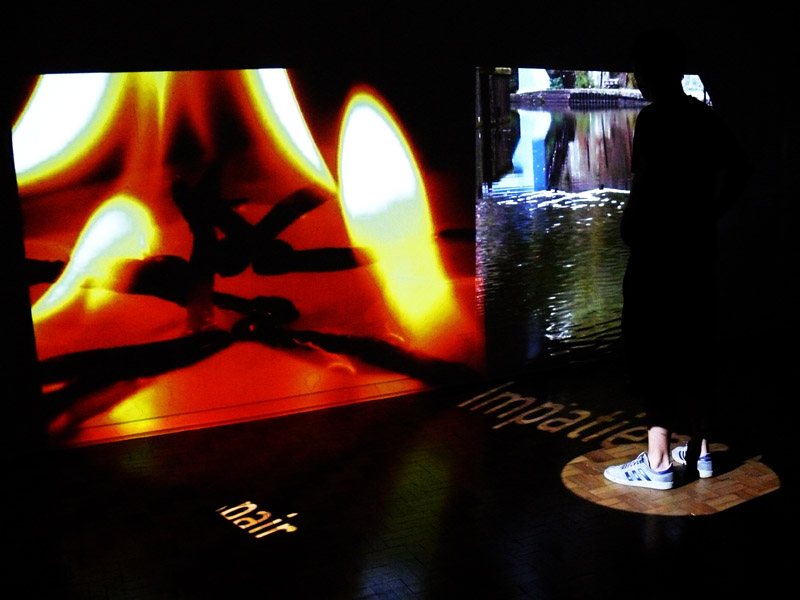
Between training as an architect and moving into digital design, I spent a while on the side in the space between interactive art and design, building responsive installations with Max/MSP and sensors to see how far a physical interface could listen back. Two of them were exhibited: Logtime Twister in 2005, shown at Design in Delft with an honourable mention from Microsoft Research, and Oracle in 2009, at the 2nd Thessaloniki Biennale of Contemporary Art and at enTechno, a renowned underground electronic music festival in Athens where people could step in and interact with it.

The epitome of cross-functional thinking. Others look to you for direction and clarity as an informal leader across Product, Engineering and Design.
Neel Gulhar · Chief Product & Technology Officer · Kaluza
A design strategy that clearly ties into the wider company strategy. The senior team came to see the function as not just relevant but critical to the company's future.
Cassie Hartman · VP Product, Kaluza · now CPO, Nitro
Evi has an ability to persuade sceptical stakeholders, to communicate methodologies in such a way that their value becomes clear, to instil confidence in the people around her, whether she's working in the design studio or the boardroom.
Brendan Nelson · Head of Design Strategy · Tobias & Tobias
The headline on Evi is, she will make a difference. Her resilience is not to be underestimated in a business which has undergone a fair amount of M&A with all the integration and transformation work this inevitably involves.
Katja Garrood · Chief Design Officer · Brandwatch
More references available on request, including Barb Wong, VP of Product; Matt Johnson, Chief Financial Officer; and Rebecca Gray, Director of Product, all at Kaluza.
Get in touch.